Painting Vinyl Siding Pros and Cons: A Comprehensive Guide
Exploring the advantages and disadvantages of painting vinyl siding brings to light a myriad of factors to consider when contemplating a home improvement project. From enhancing the visual appeal of your house to the potential challenges that may arise, this topic delves into all aspects of painting vinyl siding with a blend of informative insights and practical tips.
As we navigate through the intricacies of painting vinyl siding, you'll gain a deeper understanding of the benefits and drawbacks associated with this popular home exterior enhancement.
Pros of Painting Vinyl Siding
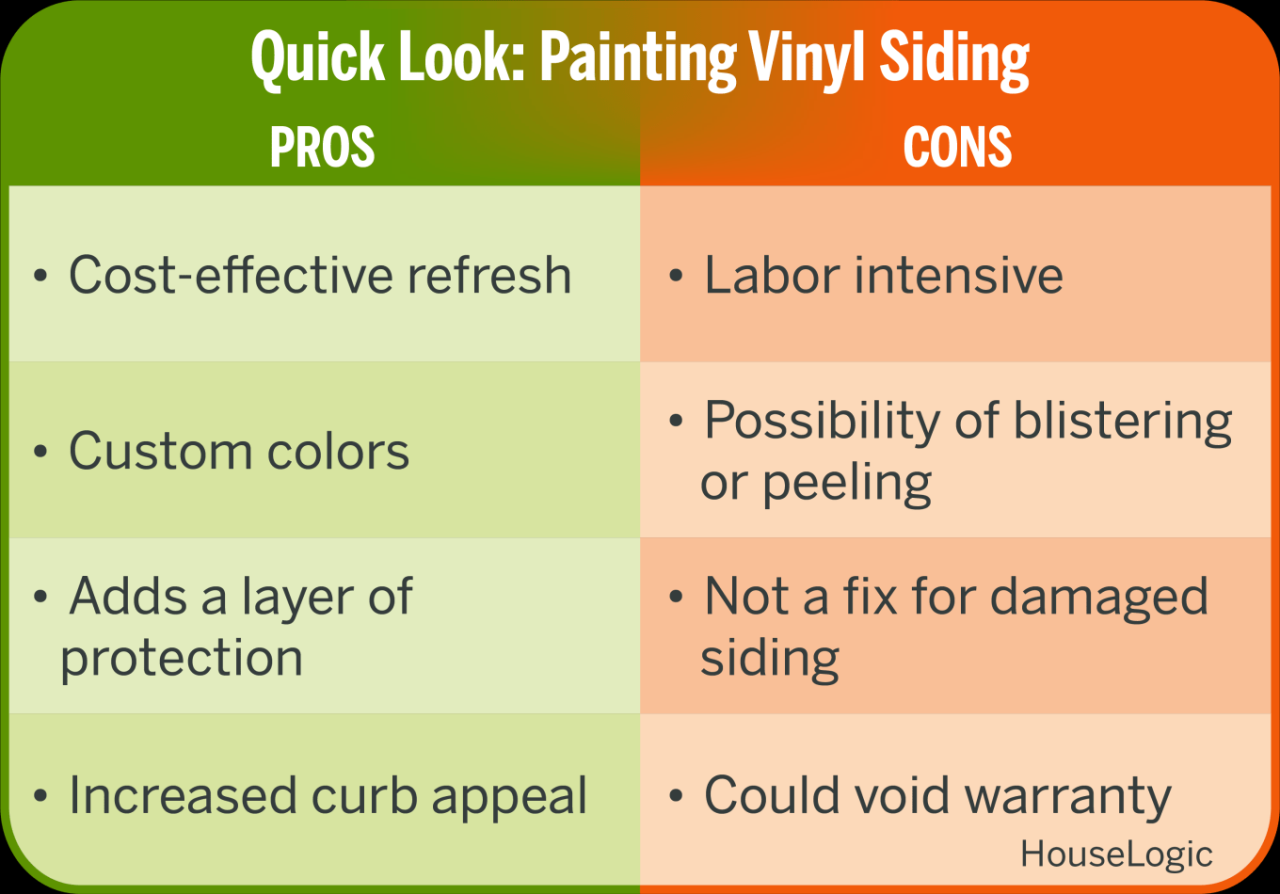
Painting vinyl siding comes with several advantages that can enhance the overall look and feel of a home. By choosing to paint vinyl siding, homeowners can enjoy the following benefits:
Enhanced Curb Appeal
Painting vinyl siding can significantly improve the curb appeal of a home. With a fresh coat of paint, the exterior of the house can look brand new and well-maintained. Homeowners have the flexibility to choose from a wide range of colors to match their preferences and style, making their home stand out in the neighborhood.
Color Customization
Unlike traditional siding options that come in limited colors, painting vinyl siding allows for more color customization. Homeowners can choose any shade or color they desire to achieve a unique and personalized look for their home. This flexibility in color selection gives homeowners the freedom to express their individuality and create a property that reflects their personality.
Cons of Painting Vinyl Siding
Painting vinyl siding, while it has its benefits, also comes with its own set of challenges and drawbacks. Let's explore some of the cons associated with painting vinyl siding.
Potential Issues with Peeling or Fading
One of the main drawbacks of painting vinyl siding is the potential for the paint to peel or fade over time. Vinyl siding is not designed to hold paint as well as other materials, which can result in the paint not adhering properly and leading to unsightly peeling or fading.
Maintenance Requirements
Compared to the natural color of vinyl siding, painted vinyl siding requires more maintenance. Over time, the painted surface may need touch-ups or repainting to maintain its appearance. This can be a hassle and an additional cost compared to leaving the vinyl siding in its original color.
Preparation for Painting Vinyl Siding
Before painting vinyl siding, it is crucial to properly prepare the surface to ensure a successful and long-lasting paint job. This includes cleaning the siding thoroughly, choosing the right type of paint and primer, and following specific steps to achieve the desired results.
Cleaning the Vinyl Siding
One of the most important steps in preparing vinyl siding for painting is cleaning the surface thoroughly. Any dirt, grime, or mildew must be removed to allow the paint to adhere properly. A mixture of water and mild detergent or a specialized vinyl siding cleaner can be used to clean the siding.
It is essential to rinse the siding thoroughly with clean water after cleaning to ensure all residues are removed.
Choosing the Right Paint and Primer
When painting vinyl siding, it is crucial to select the appropriate type of paint and primer formulated for vinyl surfaces. Acrylic latex paint is commonly recommended for vinyl siding due to its flexibility and adhesion properties. Additionally, using a high-quality exterior primer designed for vinyl surfaces can help improve paint adhesion and durability.
Application Process for Painting Vinyl Siding
When it comes to painting vinyl siding, the application process is crucial in determining the final outcome of the project. From selecting the right tools to applying the paint correctly, each step plays a significant role in achieving a smooth and durable finish.
Tools and Equipment Needed
- Pressure washer or hose with a cleaning solution to clean the siding thoroughly.
- Exterior paint that is specifically formulated for vinyl siding.
- Paint rollers, brushes, or sprayer for applying the paint.
- Primer if needed for better adhesion of the paint.
- Drop cloths, painter's tape, and masking paper to protect surrounding areas.
Step-by-Step Process
- Clean the Surface:Start by washing the vinyl siding to remove any dirt, mildew, or debris. Allow it to dry completely before painting.
- Prepare the Surface:If the siding is chalking or has a glossy finish, consider using a primer to ensure better paint adhesion.
- Apply the Paint:Use a paint roller, brush, or sprayer to apply the paint in smooth and even strokes. Work in small sections to avoid lap marks.
- Allow to Dry:Let the first coat of paint dry completely before applying a second coat if needed. Follow the manufacturer's instructions for drying times.
- Clean Up:Once the paint is dry, remove any tape, paper, and drop cloths. Clean your tools and equipment properly for future use.
Techniques for Achieving a Smooth Finish
- Back-Brushing:After applying the paint with a roller or sprayer, use a brush to smooth out any drips or excess paint for a seamless finish.
- Paint in Ideal Conditions:Choose a day with mild temperatures and low humidity to ensure optimal drying and adhesion of the paint.
- Overlap Strokes:When using a roller or brush, overlap each stroke slightly to blend the paint and avoid streaks or lines.
- Work in Sections:Divide the siding into manageable sections to maintain a consistent finish throughout the painting process.
Longevity and Durability of Painted Vinyl Siding
When considering painting vinyl siding, it's important to understand the longevity and durability of the painted finish.
Duration Before Repainting
Painted vinyl siding typically lasts around 5-10 years before needing a touch-up or a full repaint. The exact duration can vary depending on factors like climate, sun exposure, and the quality of paint used.
Comparison to Other Siding Materials
- Painted vinyl siding is generally less durable than materials like fiber cement or brick, which can last for decades without needing repainting.
- However, when properly maintained, painted vinyl siding can still provide a durable and attractive finish for your home.
Tips for Maintenance
To prolong the lifespan of painted vinyl siding, consider the following tips:
- Regularly clean the siding with a mild detergent and water to prevent dirt and grime buildup.
- Inspect the painted surface for any signs of peeling or chipping, and address these issues promptly to prevent further damage.
- Avoid using harsh chemicals or abrasive materials when cleaning the siding, as this can damage the paint finish.
- Consider applying a clear coat or protective sealant over the painted surface to enhance durability and weather resistance.
Conclusive Thoughts
In conclusion, painting vinyl siding offers a transformative way to elevate the look of your home while also presenting certain maintenance challenges. By weighing the pros and cons discussed earlier, you can make an informed decision on whether painting your vinyl siding is the right choice for you.
FAQ Corner
How long does painted vinyl siding typically last?
Painted vinyl siding can last around 5-10 years before needing a touch-up or repaint, depending on factors like climate and maintenance.
What are the potential issues with painting vinyl siding?
Some challenges include peeling or fading of the paint, which may require regular maintenance to upkeep the appearance.
What steps are involved in preparing vinyl siding for painting?
Preparation includes cleaning the siding thoroughly, choosing the right paint and primer, and ensuring a smooth surface for painting.
How does the durability of painted vinyl siding compare to other siding materials?
Painted vinyl siding is generally less durable than materials like brick or stucco but offers more color customization options.